



The Role of Cross-Industry Innovation in Executive Leadership
Leaders with diverse industry experience bring fresh perspectives to organisations, fostering innovation and creative problem-solving....

Adastrum is a London executive search and leadership advisory firm. We appoint chief executives, chief operating and commercial officers, and the digital and technology leadership around them, into hospitality, travel and leisure groups.
Thin margins and long asset cycles make this sector unusually exposed to a senior appointment that does not work. There is rarely enough room in the model to absorb one.
Talk to us about a senior appointmentWe are retained by boards, chief executives, chief people officers and private equity operating partners to appoint the executive leadership of a hospitality or travel group. Retained means we are engaged to solve a defined problem rather than to fill a vacancy: we map the whole relevant market, approach leaders confidentially, assess them against the problem, and stay involved through the offer and the first hundred days.
The recurring question in this sector is one of scale. A group that has grown past the point where its founders can run it personally needs a different leader from an established operator rebuilding its distribution model. Before we open a search we agree which of those you are solving, because the two briefs read almost identically and attract completely different people.

Hospitality briefs arrive in the language of sites, occupancy and guest experience. Underneath, they reduce to a small number of leadership problems.
We are retained to appoint permanent and interim executive leadership, including
Our work is the executive leadership that sets direction for a hospitality or travel group. We do not place general managers, hotel or unit-level roles, food and beverage teams, front-of-house or property-based positions, we do not work below director level, and we are not a contingent agency. If that is what you need, we will gladly point you to someone better placed to help.
The scope of a mandate, in short. Where a brief falls outside it we will say so at the first conversation rather than three weeks in.
| Scope | What we do |
|---|---|
| Roles in scope | Chief Executive, Chief Operating Officer and Chief Commercial Officer. Chief Development Officer. Chief Technology Officer and Chief Digital Officer. Chief Customer Officer and Chief Marketing Officer. Directors of Digital Transformation, Programme and Change. Board, non-executive and advisory appointments. |
| Roles out of scope | General managers, hotel and unit-level roles, food and beverage teams, front-of-house and property-based positions, and anything below director level. We are not a contingent agency. |
| Seniority | Director level and above, up to and including the board. |
| Engagement basis | Retained. We are not a contingent agency and do not work on percentage-of-placement terms. |
| Typical timeline | Shortlist four to six weeks from briefing. Eight to twelve weeks from briefing to accepted offer. Interim leaders can be in the seat within days. |
Five stages, run the same way on every mandate. The timings are the ones we work to, not the ones that read well.
Stage 1
We establish what the appointment has to change, what has already been tried, and what a new leader will genuinely be permitted to do. In owner-operator and founder-led groups that last question is the important one, and it is the one least often answered honestly before a search begins.
Stage 2
We map the relevant market comprehensively: leaders already operating at group level in hospitality and travel, and those in adjacent multi-site and consumer businesses whose experience transfers. We approach each one personally and confidentially.
Stage 3
Assessment is a subject-matter conversation between peers, not a scripted competency exercise. In hospitality we weight the distinction between running sites well and building the systems that let other people run sites well, because the sector promotes heavily on the first and the job usually requires the second.
Stage 4
We present three to five candidates with our recommendation, the trade-offs between them, and what we would do if it were our decision. We do not rank candidates to you before you meet them, because the ones ranked second and third then walk into the room on the back foot.
Stage 5
We manage the offer and stay close to the leader and the sponsor through the first hundred days. In a seasonal business the first peak is the real test, and it usually arrives before a new leader has finished meeting the estate.
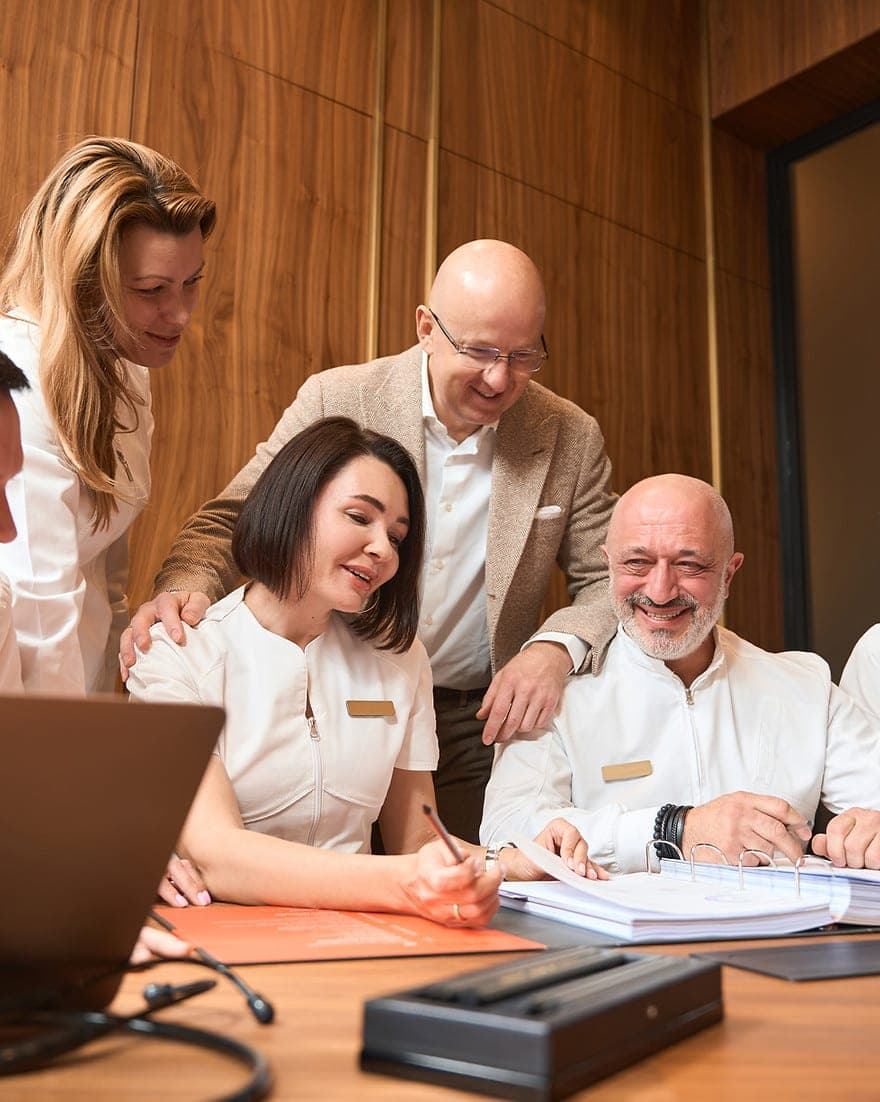
A strong CV from a well-known operator is a safe-looking choice in a board pack. It tells you what someone has been part of. It does not tell you how they will lead when a season underperforms, a refurbishment programme slips, or a cost plan lands on the team they have only just started to build.
Working with the social psychologist Dr Ian Stewart, we assess how a leader operates when the room is calm and, more usefully, what they reach for when it is not. Those defaults are developable rather than fixed, which is the point: a leader who can see their own can regulate it. It is the difference between an appointment that compounds and one that quietly comes apart around month twelve.
We place across sectors on purpose. The pattern recognition that changes an outcome usually travels better from outside an industry than from within it, because people inside a sector have often arrived at the same answers as one another.
A leader who has already professionalised a multi-site services business, or already run a commercial function through a change of model, carries that judgement whatever industry earned it. We map inside and outside hospitality and let the problem decide where the right leader comes from.





Adastrum brings twenty years of appointing senior leaders into complex organisations, a behavioural assessment method developed with the social psychologist Dr Ian Stewart, and our Meta Team programme, which has worked with leadership teams at organisations including Nasdaq, Novartis, HSBC, Unilever and EQT.
No. We appoint board and executive leadership at group level: chief executives, chief operating, commercial, digital and technology officers, and transformation directors. We do not place general managers, unit or property-level roles, food and beverage teams or front-of-house positions.
Hotel and resort groups, restaurant and leisure operators, travel and tour businesses, and investor-backed hospitality platforms. The common thread is a group in growth or transformation where one senior appointment carries a disproportionate share of the plan.
The service is specialist; the firm is not, deliberately. Our specialism is leadership: defining the problem a business needs to solve and assessing how a leader will behave under pressure. That method travels across industries, which is frequently why it works inside hospitality.
Most mandates reach shortlist four to six weeks after briefing and run eight to twelve weeks to accepted offer. Searches running through a peak season take longer at the interview stage, and we build the calendar around that rather than fighting it.
Retained, exclusively. Being retained is what allows us to spend the research time a mandate genuinely needs from day one, and it means every leader we approach on your behalf gets a consistent, considered experience.
Yes. Where you cannot wait for a full retained search, we place experienced interim leaders within days to hold a function steady or deliver a defined programme with a clear end point.
Before your next senior appointment, one question is worth sitting with. Are you about to hire someone who knows what good looks like, or someone who has actually built it?
If that is a conversation worth having, it is exactly the one we welcome.
Talk to us about a senior appointmentObservations from twenty years of appointing leaders into complex organisations: what separates an appointment that compounds from one that quietly comes apart, why succession plans drift towards the most visible candidate, and what a board ought to ask before it signs off the brief.
Leaders with diverse industry experience bring fresh perspectives to organisations, fostering innovation and creative problem-solving....

Some companies are so successful that they never have to be brilliant. Think about the organisations that dominate their markets so completely that urgency simply does not exist. The revenue keeps coming. The brand carries weight. The infrastructure is established. And somewhere inside that comfort, the standard of leadership quietly settles into something unremarkable.

Trust in senior leaders is also under strain. Only 14% of UK workers say they have faith in senior leaders’ decisions. That erosion shows up in slower adoption of change, more challenge behind the scenes and ultimately a higher cost of making anything stick. In this environment, the most important question is not "Is our strategy right?". A better question is, "Is the leadership system at the top capable of delivering it?".
Most succession planning assumes someone is ready to step up. But what happens when the obvious successor is the one who leaves? A look at why heir apparent plans fail, the real cost of an unplanned leadership transition, and how boards build genuine continuity.
What’s 2+2 in leadership hiring? The answer isn’t always 4. Especially when you forget to account for the hidden variables: character and context. Almost 50 to 70% of new executives fail within 18 months, not for lack of skill but because hiring often overlooks character, cultural fit, and adaptability. We often think of hiring as a simple maths problem. You line up competence with experience and expect to find your next great leader. Except it rarely works out that neatly.

Are you hiring for comfort or for progress? It’s an easy trap to fall into. You sit across from a candidate who reminds you of yourself ten years ago. Or maybe they mirror someone on your team who’s been successful. They “just feel right.” That’s the comfort zone of culture fit. It feels safe. It feels smooth. But here’s the risk: If everyone looks the same, thinks the same, and solves problems the same way, fresh ideas never surface.